Showing posts with label Idea Power. Show all posts

Monday, May 12, 2008

Profitable Ideas

People wonder if ideas can make money -- yes, there are profits in ideas. Take personal investing, for example. Investing in the right security yields profits. Essentially, we have the equation


Good Idea + Investment = Profit.


There are millions of "good ideas" on how to invest money, and often people hire experts to provide them with investment ideas (stock broker, financial planner, etc.). One problem with this arrangement is that often the expert "hired" really works for a firm who sells investments. Clients wonder, "Who holds sway over this expert, me the client -- or the firm, his employer?" Conflicts of interest occur. For those like me who are self-reliant and don't mind simple online research, I developed a system that generates good investment ideas using free online tools. The method solves the conflict, removing it from clients' worries.


First, I advocate the value investment philosophy proven effective by such icons as Warren Buffett and Benjamin Graham. I recommend reading Graham's book, The Intelligent Investor.

Grounded in the knowledge of how value investing works, you can begin searching for profitable ideas. In Graham's day, people pored over printed materials. One beautiful thing about investing today is that there are so many new tools to get results. I use an advanced, free stock screening tool. I use screening parameters I developed based on the value philosophy and generate lists of potential investments. I take those results to information boards, such as Yahoo's finance page for more detailed analysis of companies I like. Once I gain the knowledge of the business and confirm that it is worth the investment, I place the trade myself. I monitor the results and have a target sales price on the up and down side.


This method generates profits from ideas, true idea power. The key is establishing optimal parameters and maximizing your profit. I will share my stock screening parameters soon, a quick "how to" for today's value investor, but am also interested in other views, so comments are encouraged!

Check back soon for links to my course on value investing, how to pick winning investments, which is under revision temporarily.

Friday, April 25, 2008

How to get better ideas... and more of them!


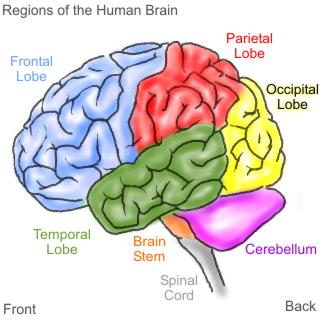
Here is advice from Wired Magazine on how to improve your brainpower.
Takeaways:
- Have a learning plan. Think about what you need to know and focus your efforts on the highest value information that is easiest to learn.
- When memorizing facts, mix them up and set timers to randomly distract you during your memorizing.
- Regular aerobic exercise is vital... even walking works, and practice good breathing.
- Limit caffeine but keep a pretty steady stream of it in small amounts throughout the day
- Figure out and use your learning style, whether it be visual, kinesthetic, listening, or tactile.
Other comments follow the article links below:


Get Smarter: 12 Hacks That Will Amp Up Your Brainpower
1: Distract Yourself -- this is possibly a good approach for memorizing but seems hard to do.
2: Caffeinate With Care -- good advice; one cup of coffee a day followed by small, regular doses
3: Choose Impressive Information -- interesting idea... memorize useful and easy facts
4: Think Positive -- great advice for learners: a virtuous cycle!
5: Do the Right Drugs -- huh?
6: Juice Your IQ Score -- good advice that ties with 3 and 4
7: Know Your Brain -- exactly how does this help?
8: Don't Panic -- right on... how do we not panic? If you do, know your IQ plummets.
9: Embrace Chaos -- mix up things to make them somehow easier to remember.. counter intuitive.
10: Get Visual -- for visual learners, a big YES
11: Exercise Wisely -- breathing and aerobics... the brain uses a disproportionate amount (20%) of the oxygen in your blood, so improving your cardio-vascular system will help your brain.
12: Slow Down -- good advice for improving reading comprehension, but practice at reading quickly does work, so aim for the optimal: 500 wpm according to the article.

Wednesday, April 2, 2008

Reflections of a Leader... Updated


We live in the Information Age. We have Information Technology, Chief Information Officers, Information Security, Information Systems, and an Information Economy. The economy shifted away from the traditional manufacturing base that made America an industrial powerhouse. I remember as a child, while riding in our Chevrolet, listening to the radio and hearing he jingle: “GM, mark of excellence!” GM had over 50% of the American market for automobiles then, and things were good. Here is what Alfred Sloan, Jr., former leader of GM, said in his book, My Years With General Motors:


“It is clear from the events and ideas I have described that my generation had an opportunity unique in the history of American industry. When we started in business, the automobile was a new product, and the large-scale corporation was a new type of business organization. We knew that the product had a great potential, but I can hardly say that any of us, at the beginning, realized the extent to which the automobile would transform the United States and the world, reshape the entire economy, call new industries into being, and alter the pace and style of everyday life.” -- Alfred Sloan, Jr.


Fast forward to 2008... Let’s do a find & replace on this passage, replacing automobiles with computers, and let’s replace new with monolithic. Perhaps Mr. Jobs or Gates will write this some day:


It is clear from the events and ideas I have described that my generation had an opportunity unique in the history of American industry. When we started in business, the computer was a monolithic product, and the large-scale corporation was a monolithic type of business organization. We knew that the product had a great potential, but I can hardly say that any of us, at the beginning, realized the extent to which the computer would transform the United States and the world, reshape the entire economy, call new industries into being, and alter the pace and style of everyday life.


Today, computers and information play a central role in the economy, in business, in the production of goods and services, including automobiles. While GM led the way to building great wealth through large organizations with huge economies of scale, the computer ushers in an age of building wealth through information exchange. Economies of scale come from mass customization, not mass production. Successful, lean manufacturers know this and know how to use information to their advantage.
Lean manufacturers produce what customers order, not what the forecast says. Raw materials are pulled through the manufacturing operation, and oftentimes the supplier gets paid when the final product is completed. Automated replenishment systems ensure outages are a thing of the past. Often the lean enterprise is the only enterprise left, and American manufacturers have that message. But there is an area of lean manufacturing that remains a big problem for American companies, and it ties to information: it is their designs, they aren't lean.
For designs to be lean, they must support the lean manufacturing system. They must aid in automation, build in fail safe devices and features, provide for quick and easy changeovers (part to part, color to color) by being modular, be designed to an appropriate tolerance, and generate the lowest cost product meeting the design intent. Most American designs have a long way to go before they can meet these criteria, as "lean" is considered "just a plant thing" and not for design.
So as multinational corporate design centers open in China and India, I have a prediction. American designs will go the way of the American production: get lean or get out.

Tuesday, March 18, 2008

Ideas Change the World


Time Magazine's cover story this week is "10 Ideas That Are Changing the World." They say that "ideas are the secret power that this planet runs on." The first story is about the idea Time feels has the greatest potential to change the world, namely, that we belong to a global community and gain more by cooperation than competition. They claim "the defining challenge of the 21st century will be to face the reality that humanity shares a common fate on a crowded planet." The article calls for a new approach to global problem-solving. It's worth a read.
A new approach to problem solving... a very powerful concept that weaves in my business and community service life.

I help teams to implement a new approach to global problem solving -- by providing online meeting facilitation training.

Wednesday, February 27, 2008

Wasted Time

I can tell you what a waste of time most meetings are. I have experience. I listened to countless worthless presentations and thought there must be a better way. I now found a better way and am so happy to be able to share it... Idea Power.

Ideas are like the wind, mostly they just blow by. With our process, it's like putting up a huge wind turbine capturing your team's ideas and turning them into power -- idea power -- power for executive action.

What's your story... the worst meeting you've ever been in? Where was it? What was the purpose? What happened? Why did this meeting happen at all? I will feature the most interesting story in an upcoming post. Thanks!

I have a new course on effective meetings... click here to create a new account and check it out!

Flyer for services offerred


Read this doc on Scribd: Services Available Flyer

Tuesday, February 26, 2008

Imperiled Start Up

"Foolish consistency is the hobgoblin of small minds."
Ralph Waldo Emerson


I was in charge of a new plant start up -- a risky assignment since many launches went badly, and this was my first try at it. My responsibility was to take an empty shell of a building and populate it with machines and people, processes and systems, and generate profit.

This launch depended on implementing some unproven new technology, a red flag. The technology in question was elaborate mechanical tooling which deployed in a CNC machine to cut a precise spherical radius on the ID of a casting. To perform this feat, the CNC equipment loaded the casting, then the tool, in the shape of a cylinder with a slot cut out of the side, was inserted into the casting opening. The tool had an ingenious mechanical device to deploy the cutter from the slot using a spine-like grooved lever. The cutting was done at high speed (turning the tool), and at the end of the cycle, the tool was quickly stopped then the cutter was retracted using spring action, hiding the cutter away in the cylinder again, and the tool was pulled from the casting. Nice Idea!

We got the equipment in and set up. We hired great people. We did a lot of training. All the while, I kept hearing about broken cutters. This was troubling because it was unproven technology and the entire start up depended on success. Not only that, cutters cost over $100 each, so the budget was feeling the pain.

We talked to the experts at the toolmaker. They tried to fix the problem. They kept trying, but to no avail. Finally, after weeks and weeks of trying, it became clear that this start up was in peril.

I ordered autopsies of each broken cutter. We opened up some tools to see what was happening. The engineers were puzzled and befuddled. We were asked to start working on "Plan B," which would cost a lot in capital to retrofit our operation. Then I saw the key.

Each tool that had a broken cutter, when opened up, had several small retracting springs which had toppled in the deceleration. The centrifugal force caused the springs to fall over on their side, laying down and providing no force to retract the cutter.

A big shock-absorber spring, that's what we needed! Once we figured out how to place strong enough spring coaxial with the center line, the decelerating forces were overcome by better engineering. The funny thing was, it took a tremendous effort to convince the inventor of the technology to change it... even though the initial design was failing.

My take-away: be open to new ways of looking at things, especially if we invented something and the old way isn't working. When we invent something we are proud of, great! When improvements to that invention come along, better! Often new ideas come from the most unlikely sources, so have eyes and ears open, and minds prepared to accept the possibility of something better.

Please let me know about a time you saw an inventor learn how to improve their invention from an unlikely source...

For more information on the "imperiled start up": http://www.mmsonline.com/articles/069903.html